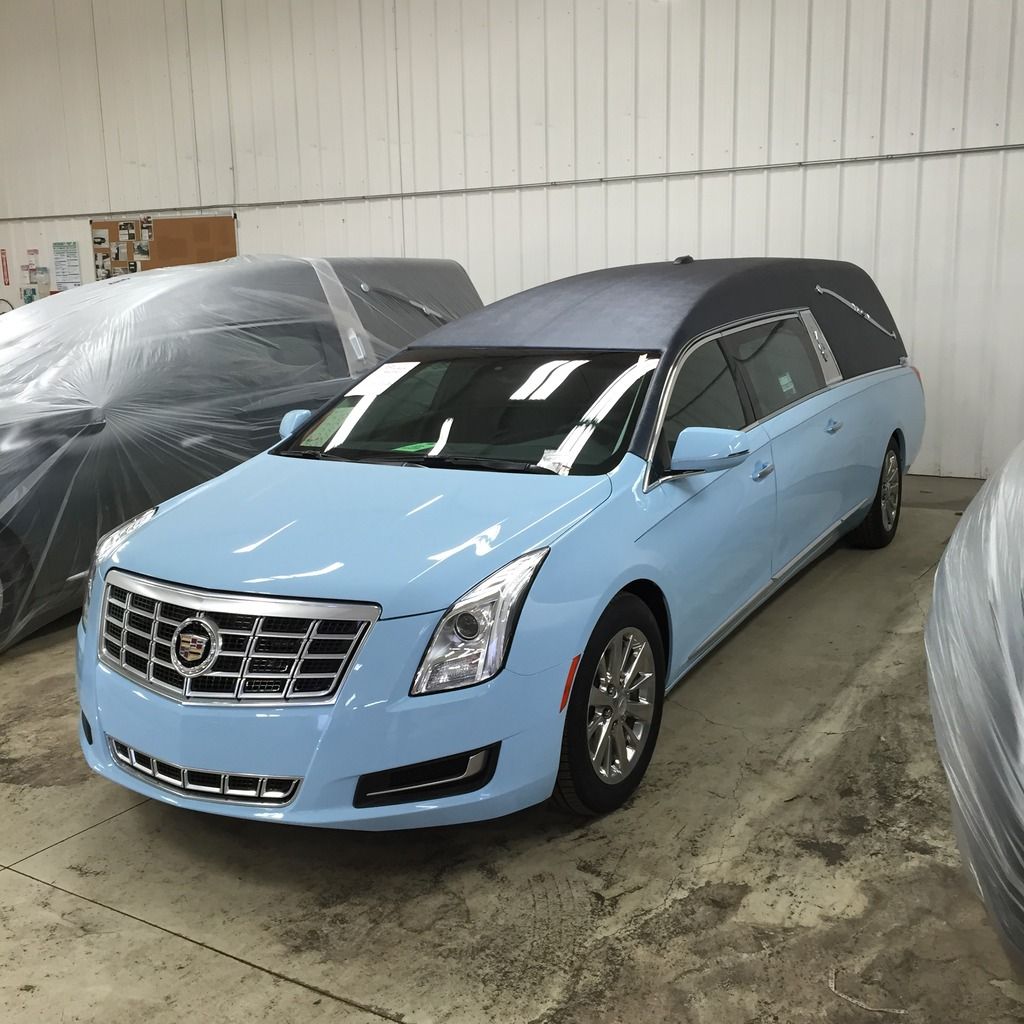
We were due for a new car at work and after alot of poking, proding, a little teasing, and some batting of the eyelashes I convinced the boss to go for the car I wanted, rather than the one he would historically have bought. I admit, he pretty much gets whatever we (uh, I) ask for... tablet PC, office cell phone, 3 axis rotary/laser engraving machine, and the most recent - a 2015 Sayers & Scovill Victoria.
Now, the Victoria has long been my favorite model. See, Cadillac doesn't - and hasn't since the mid 60's built livery cars. For a short while Caddy did build some in-house four door limos but never hearses. The funeral cars have always been left to coachbulders to craft. That being said, S&S has always been my favorite for their style and the shape of the rear end and side panels versus other coach builders. I know it doesn't mean much, but Miller-Meteor, Superior, and Eureka's also make my list, and another coachbuilder just "re-opened" their doors after a 20 some-odd year hiatus - Armbruster-Stageway. Most of the cars here on Long Island are Superiors, Federals, Eurekas and S&S. Eureka was a big name back in the day, the hearse from "Harold and Maude" had been long sought after, and once found in 2010(ish) sold for BIG money. The Miller Meteor that carried Kennedy sold at auction well into the $175k range, and the S&S that carried Elvis was found in central PA just a few years ago. for comparison, Whitney Huston went in a Lincoln Federal Diplomat - it was hideous.
No, not all hearses are created equal. Just like several coach builders configured different VW campers, so too have many a hearse been hand crafted.
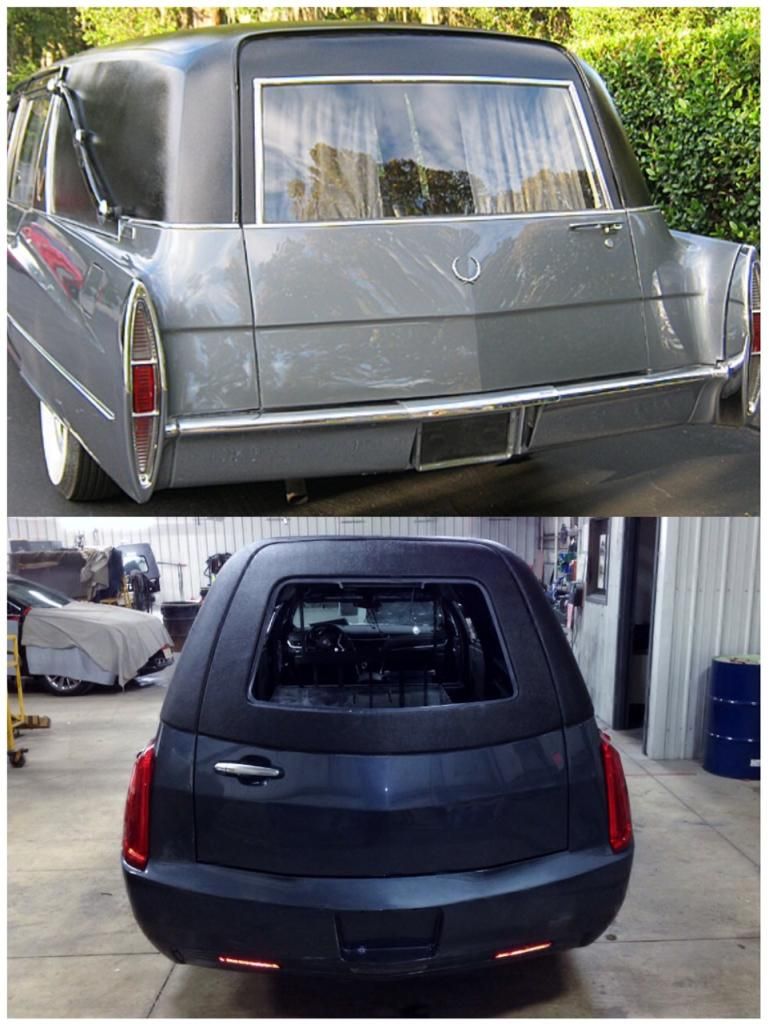
The Victoria traditionally was a commercial glass car, with a chamfered roof. So in addition to the center and rear section of the car getting extensions the roof would be cut about 4" below the top of the windows and lifted about 3". This meant new glass for the car all around but gave a real nice dimension to the car and made the window to body ratio seem more "normal."
Here, one of my favorite Victorias. This car has been a flirt with the auction block a few times in the last few years finally winding up at a shop down in Florida. it is currently wearing the wrong wheels, but in any case a few teasers.


So, fast forward a few decades. Up until 2012 GM still allowed the roof lift for the commercial glass. But, with the new model the XTS no more modifications are allowed to the A pillars because of airbag placement.
Needless to say, I still wanted the Victoria (even though it is about $10-15k more expensive than the car we would usually have ordered.
The car started production earlier this week. Of course, I emailed the factory and have been getting photos of the build.
I'll be heading out to pick it up and tour the factory in the third week of March. The car is slated to be completed on 3/16.
So, the build begins:
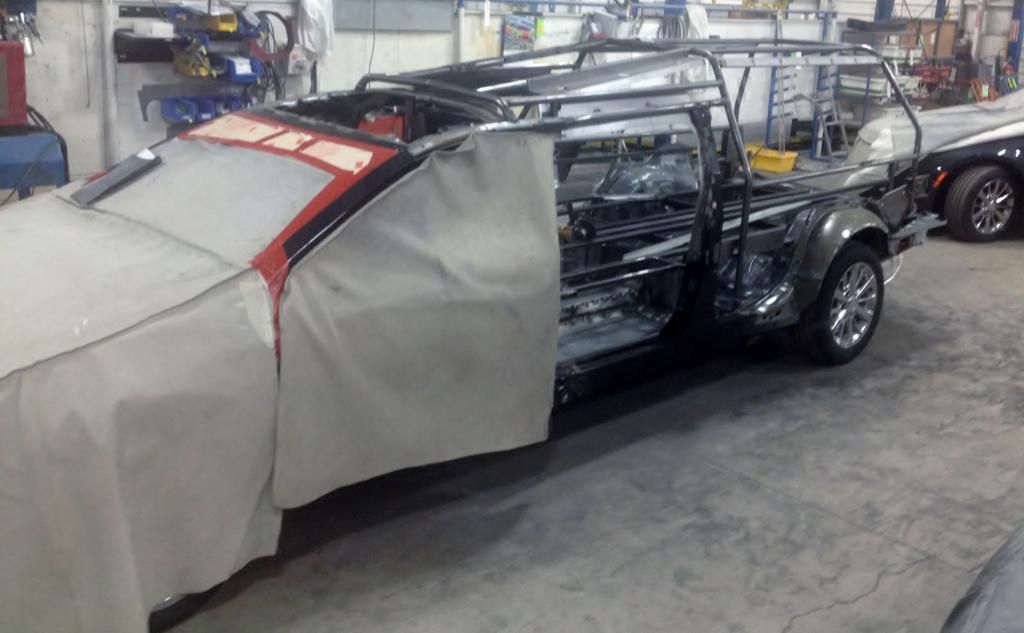
This first photo is showing quite a few things. First, for perspective we are seeing two parts of the car here. In the foreground is the roll cage that will shape the rear of the car. Imagine if you were standing on the rear bumper of the hearse looking over the roof twords the nose. The opening you see a the bottom of the photo will eventually be a door.
In the background (top) of the picture is the chassis. A Diamond Blue Firemist Metallic XTS X series (commercial prep) chassis. These cars are delivered to the coachbulder as a running driving car with only the chassis, 4 "heavy duty" wheels, the windscreen front doors, front seats and dashboard. There is no back doors, seats, carpet, windows or trunk as those parts would all get tossed to the side.
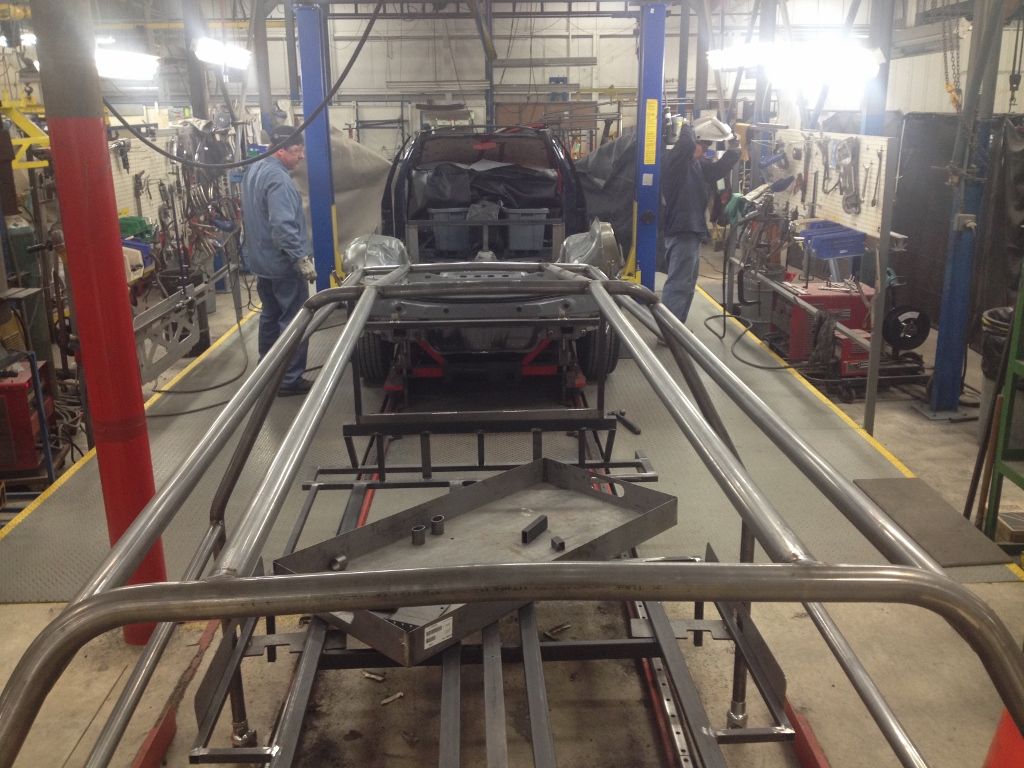
Now, it s kinda tough to see. But there are two "tracks" running under the car to a jig that is holding the car up about 2" off the ground. If you look in the bottom right 1/4 of the photo you can see that the tracks have "holes" in them. These holes are measurement points for the jig that is supporting the car. With the car on the track, the chassis gets cut in half at about the point where the back of the front seats is. Then, the jig gets slid back 48" and a mid section is grafted in. A similar extension is put on the rear of the car.
Here, you can see the chassis with it's mid section installed, the new C pillars in place, and the roll cage in the back. Soon, that roll cage will come to meet the chassis. In this picture, the car is still on the jig and they are installing the rear table extensions.
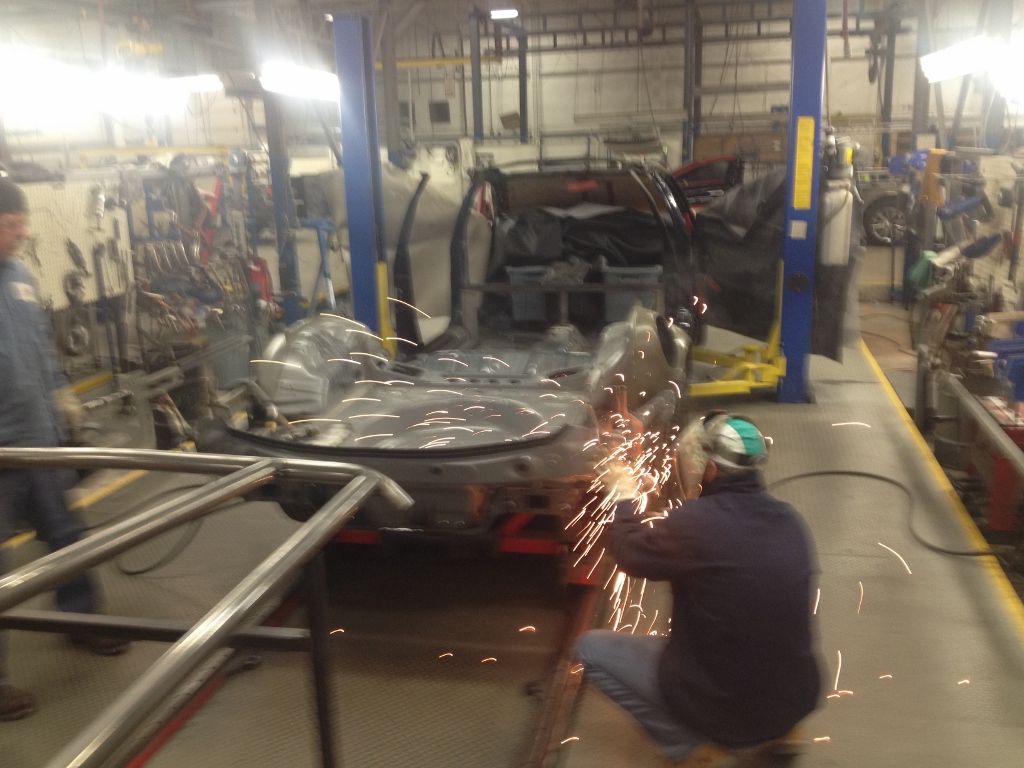
So, these two pictures are from the rear when adding the table extension on the back of the car. There's not alot to see but you can see the track that the car is on, and just barely make out that the wheels are still off the ground by a few inches.
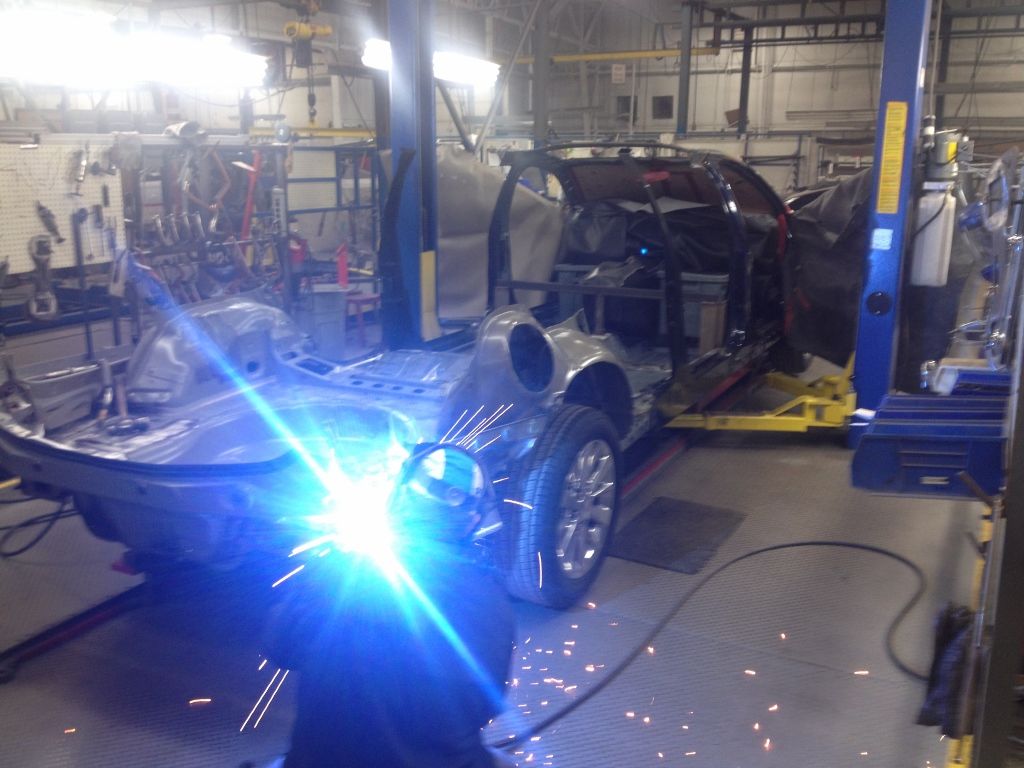
These next pictures are as the car left off on 2/18
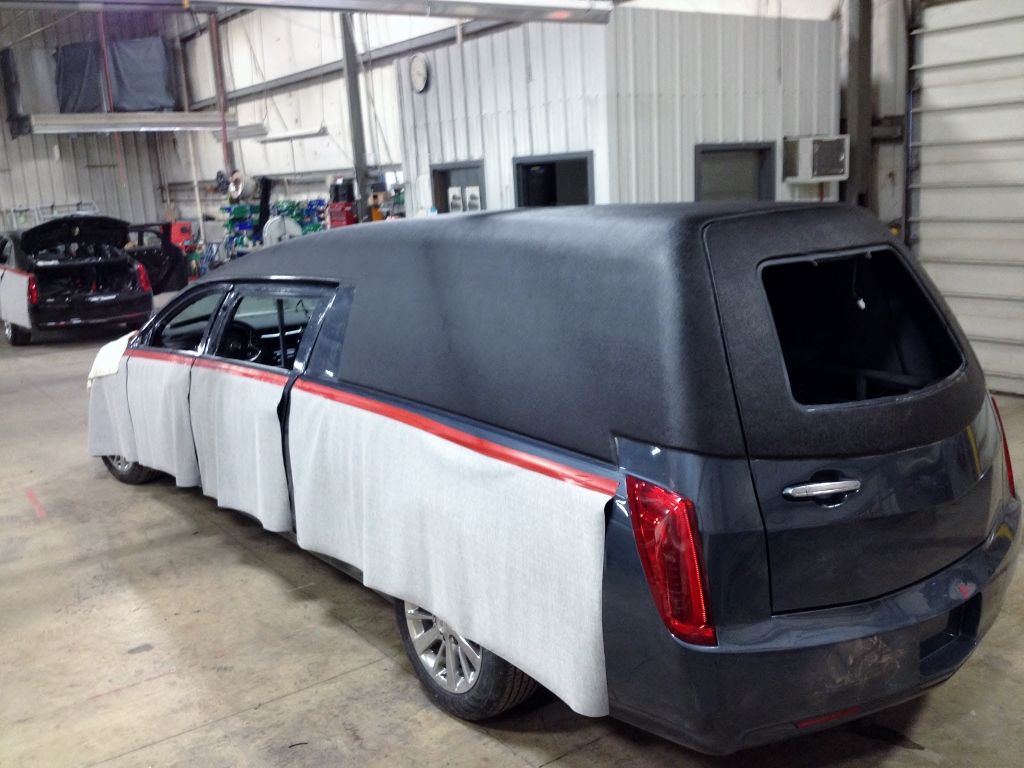
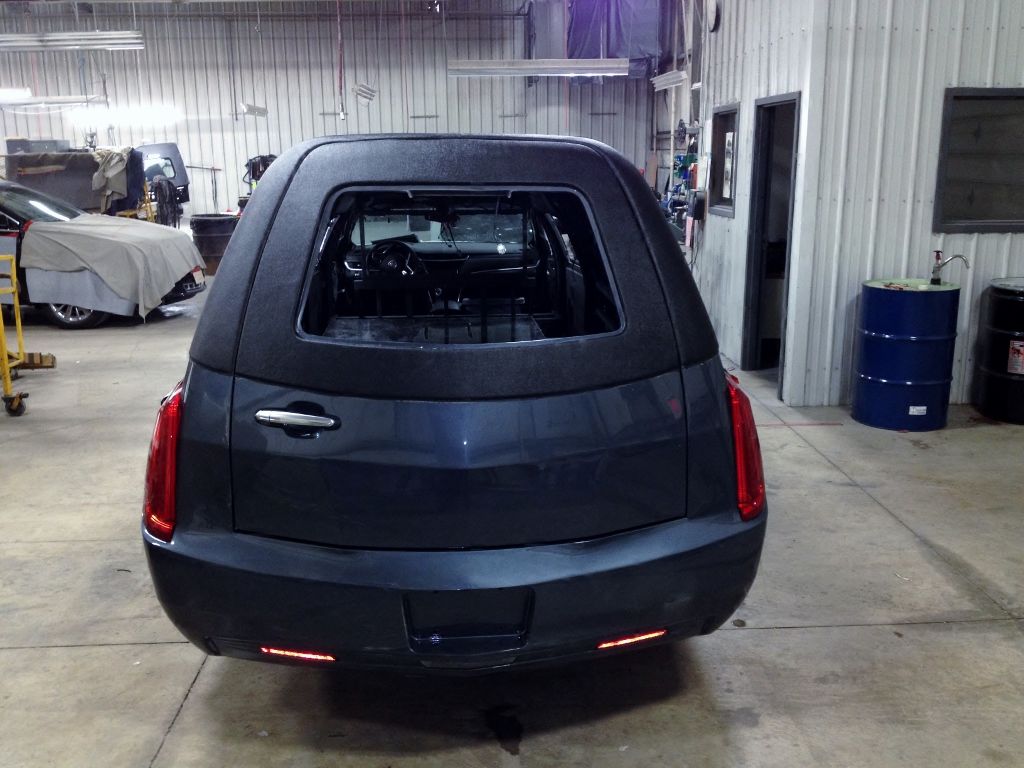
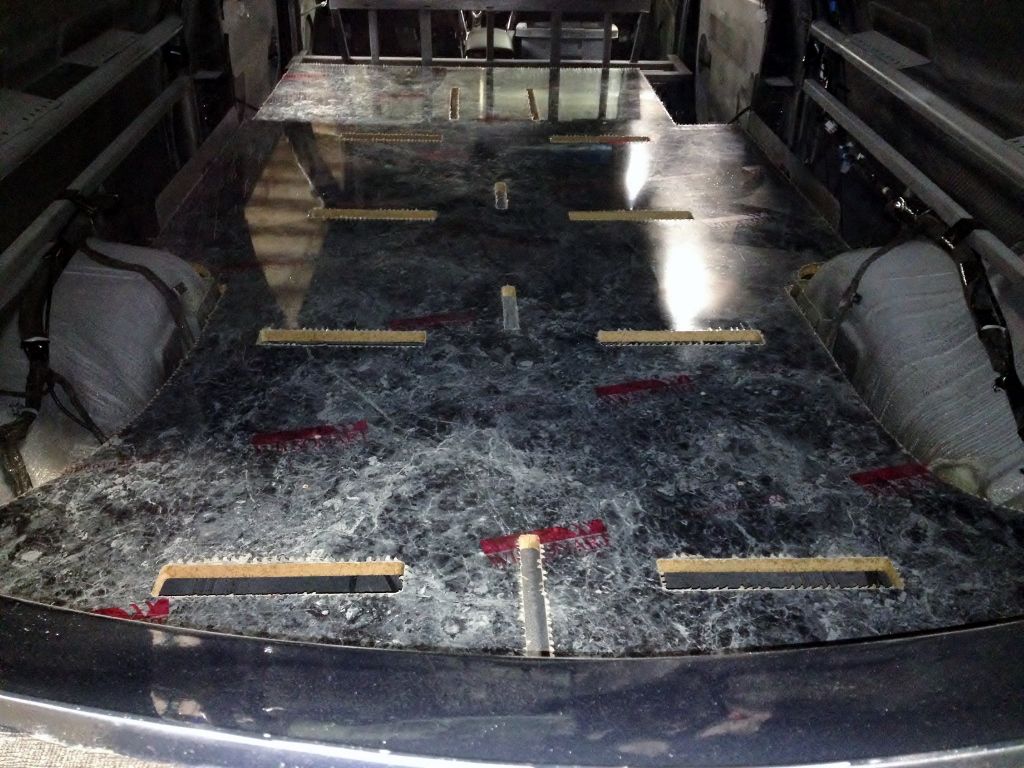
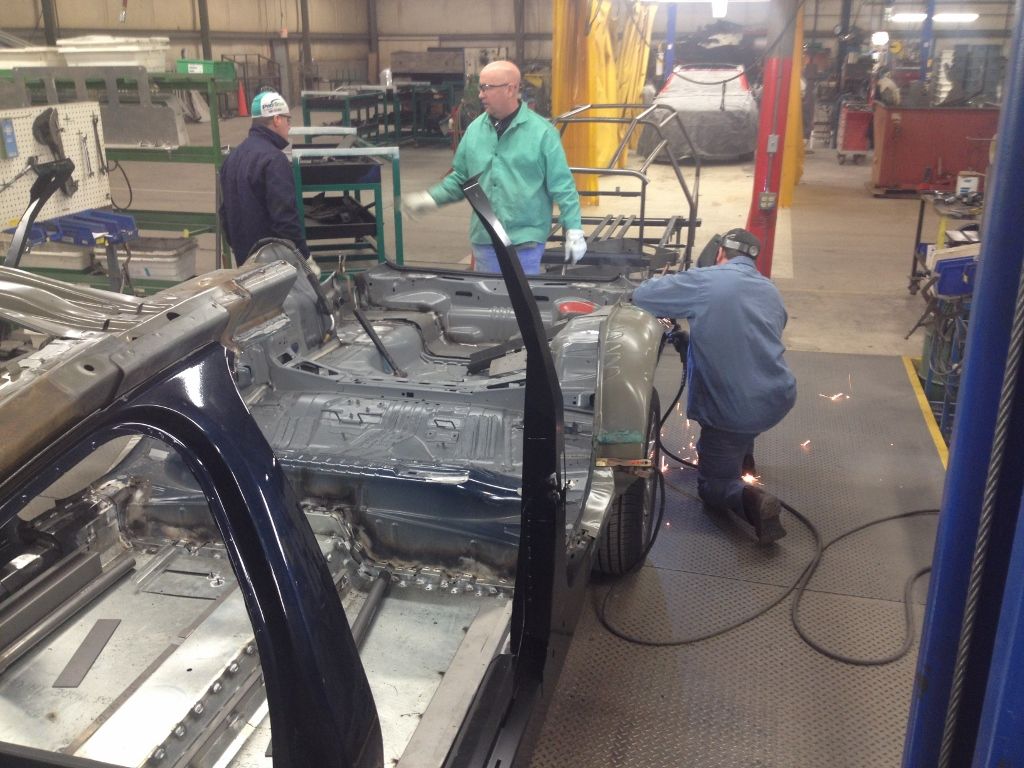
Here, the car is back on all four of it's wheels. The mid section is in, the rear extensions are on, the roll cage is on the body and the floor supports are laying in place. They're not yet in their final spots, nor welded down. These will eventually come to support the casket table. If you look twords the front of the car you can see there is a rectangular opening just behind where the seats will be. There is a large 4" box framed support that ties the sides of the car together, and acts as a stop if in an unforseen circumstance the car is in an accident the frame is supposed to prevent the casket from coming into the cabin. In the foreground, you'll see a large flat panel welded to the upright around what will eventually be the door opening. This is for the door larch mechanism and the nader pin. The big hole you see behind the passenger wheel is for the fuel fill.
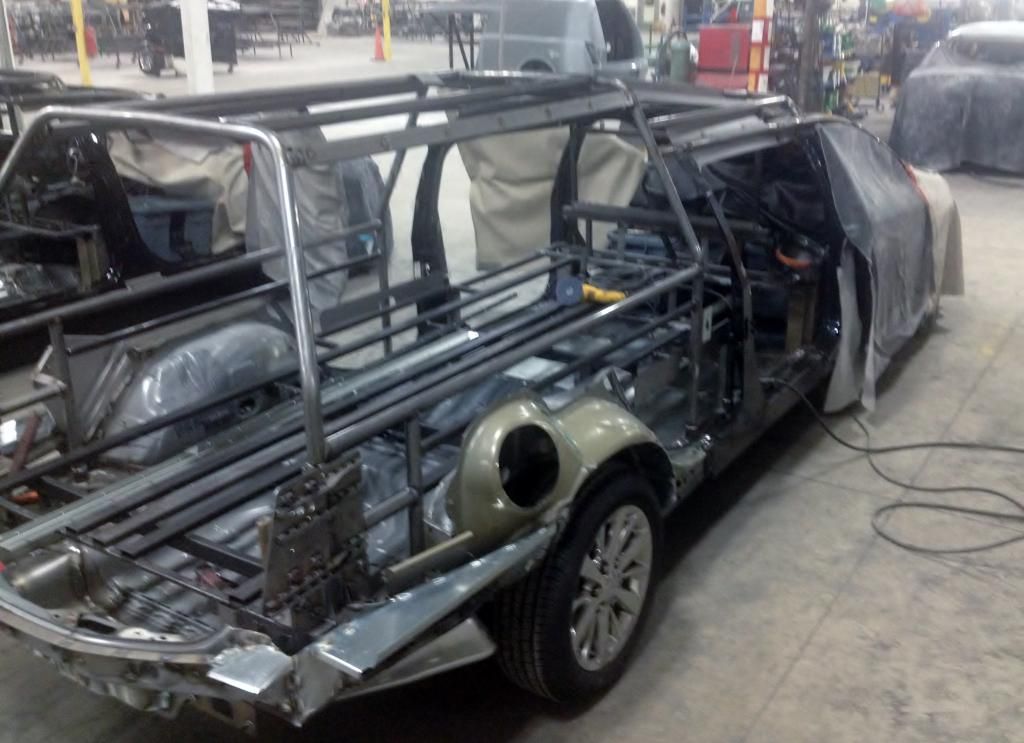
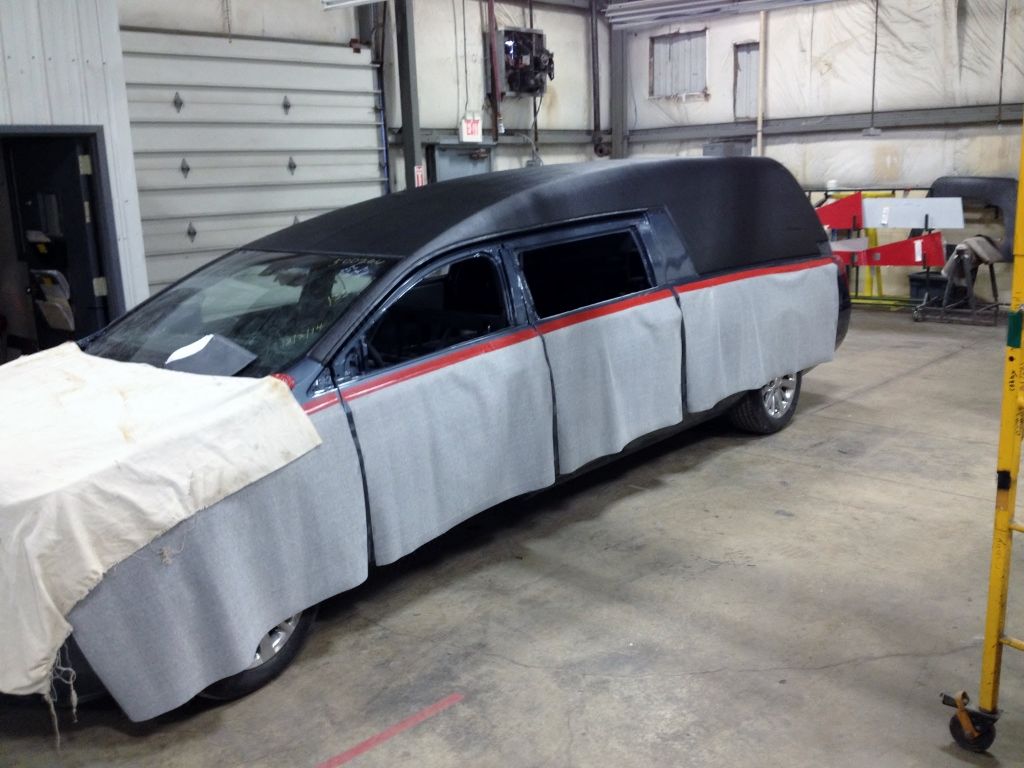
Here is the most recent picture. You can really see the roll cage in it's glory here. Not that I would want to see the car in an accident, but it is nice to see that there is more to the back of the car than just a fiberglass mold.